
How Often Should Solar Panels Be Cleaned in Southern California?
Solar panel efficiency drops when dirt, dust, and debris accumulate on panel surfaces. This guide explains cleaning frequency requirements for Southern California conditions, what reduces panel performance, and how to determine when solar panel cleaning in Menifee, CA, becomes necessary.
What Environmental Factors Affect Solar Panel Cleaning Frequency?
Southern California's climate creates specific conditions that impact how quickly panels get dirty:
Dust and particulate matter: Inland areas like Menifee and Murrieta experience frequent dust storms and high airborne particle concentrations, especially during summer and fall months.
Rainfall patterns: Southern California receives 10 to 15 inches of annual rainfall concentrated between November and March. The dry season from April to October provides no natural panel rinsing.
Pollen and organic material: Spring months bring heavy pollen deposits from local vegetation. Bird droppings accumulate more in areas near agriculture or water sources.
Air quality conditions: Smoke from wildfires and urban pollution creates film buildup that blocks sunlight. These particles bond to panel surfaces more strongly than regular dust.
Coastal properties within 10 miles of the ocean face salt spray and marine layer moisture that attracts and holds dirt particles. Inland locations deal with agricultural dust, construction activity, and desert winds carrying fine sediment.
How Does Dirt Accumulation Reduce Solar Panel Output?
Clean solar panels operate at maximum rated capacity when sunlight reaches photovoltaic cells without obstruction. Dirt creates a barrier that blocks or scatters light before it converts to electricity.
Research from solar industry studies shows measurable efficiency losses:
- Light dust coverage reduces output by 5% to 7%
- Moderate dirt buildup decreases production by 12% to 20%
- Heavy soiling with bird droppings or debris cuts efficiency by 25% to 35%
The impact varies based on panel angle and orientation. Flat or low-slope installations accumulate more debris because gravity and wind cannot clear loose material. Steeper angles allow some self-cleaning when rain occurs.
Partial shading from dirt deposits creates hot spots where blocked cells heat up while surrounding areas generate current. This temperature difference stresses panel components and may accelerate long-term degradation.
What Is the Recommended Cleaning Schedule for Menifee and Murrieta?
Standard residential solar installations in these inland Southern California cities benefit from cleaning every three to four months during optimal conditions. This schedule accounts for typical dust accumulation without excessive rainfall.
Seasonal adjustment recommendations:
- Spring (March-May): Clean after pollen season peaks to remove sticky organic deposits
- Summer (June-August): Monitor monthly during peak dust and wildfire season
- Fall (September-November): Clean before winter rains to prevent dirt from hardening
- Winter (December-February): Assess after rain events, clear loose debris
Properties near construction sites, unpaved roads, or agricultural operations need more frequent attention. Monthly inspection helps identify when cleaning becomes necessary before significant efficiency loss occurs.
Systems with monitoring equipment showing 10% or greater production decline compared to baseline performance require immediate cleaning regardless of schedule.
How Can You Tell When Solar Panels Need Cleaning?
Visual inspection from ground level reveals obvious soiling. Use binoculars to examine panels without accessing the roof.
Clear indicators that cleaning is needed:
- Visible dust layer that obscures the panel surface shine
- Bird droppings or debris stuck to the glass
- Streaks or spots from dried water containing minerals
- Production monitoring shows decreased output compared to previous months with similar weather
Compare current energy production to the same month in previous years. A drop exceeding 8% to 10% suggests cleaning may restore performance if no equipment problems exist.
White or light-colored residue indicates hard water deposits from sprinkler overspray or morning dew evaporation. These mineral films require specific cleaning approaches beyond simple rinsing.
Panel edges and frames that show dirt buildup typically mean the entire surface needs attention. Dirt accumulates first in corners and gaps before spreading across the full panel area.
What Cleaning Methods Work Best for Residential Solar Panels?
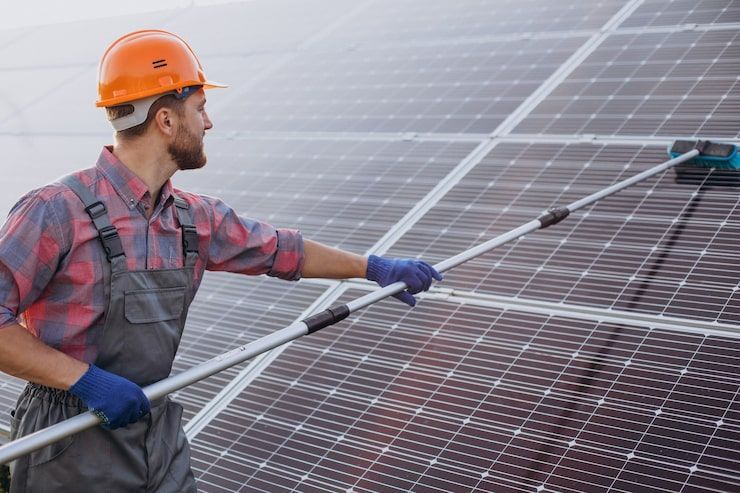
Professional solar panel cleaning services in Murrieta and Menifee use deionized water systems that prevent mineral deposits. This water lacks dissolved solids that leave spots when dried.
Standard cleaning process steps:
- Initial rinse removes loose dust and debris
- Soft brush or microfiber pad application with purified water
- Final rinse ensures complete residue removal
- Air drying without wiping prevents scratches
Deionized water eliminates the need for squeegees or towels that may scratch anti-reflective coatings. The pure water dries without spots or streaks.
Pressure washers set above 1,500 PSI risk damaging panel seals and protective coatings. Standard garden hose pressure with proper technique cleans effectively without equipment damage risk.
Avoid soap, detergents, and abrasive cleaners. These products leave residue that attracts more dirt or may damage panel surfaces and void warranties.
Should Homeowners Clean Panels Themselves or Hire Services?
DIY cleaning works for single-story homes with easy roof access and proper safety equipment. This approach saves money but requires time and physical capability to work safely at heights.
Professional service advantages:
- Insurance coverage for roof work and potential damage
- Proper equipment, including water purification systems
- Experience in identifying panel defects or mounting problems
- Safety training and fall protection gear
Steep roofs, two-story installations, or properties with tile roofing increase fall risks. Professional services carry liability insurance that homeowner policies may not cover for self-performed roof work.
Commercial properties and large residential arrays benefit from professional maintenance contracts that include regular cleaning and performance monitoring. These agreements ensure consistent service without scheduling concerns.
Homeowners comfortable with ladder work and roof access can clean panels safely if they use proper fall protection and avoid walking directly on panels or standing on mounting hardware.
What Mistakes Reduce Cleaning Effectiveness or Cause Damage?
Using tap water leaves mineral deposits that create new spots requiring additional cleaning. Hard water, common in Southern California, contains calcium and magnesium that form visible residue.
Common errors to avoid:
- Cleaning during peak sun hours, when hot panels may crack from cold water contact
- Using abrasive scrubbers or rough materials that scratch protective coatings
- Applying excessive pressure that damages seals around panel edges
- Ignoring safety protocols for roof access and fall prevention
Dawn or late afternoon cleaning prevents thermal shock from temperature differences between hot panels and cold water. Early morning works well, but panels may still be damp from overnight humidity.
Walking on panels concentrates weight on small areas and may cause micro-cracks in solar cells. Access panels from mounting rails or use proper roof ladders that distribute weight.
Harsh chemicals, including ammonia-based cleaners, damage anti-reflective coatings that maximize light absorption. These coatings cannot be replaced once damaged.
Frequently Asked Questions
Does rain clean solar panels sufficiently in Southern California?
No. Southern California's limited rainfall and long dry periods allow significant dirt accumulation between rain events. Rain helps, but does not eliminate the need for periodic manual cleaning.
How much does professional solar panel cleaning cost?
Residential cleaning typically costs $8 to $15 per panel, depending on system size, access difficulty, and service frequency. Most homes with standard installations pay $150 to $300 per cleaning visit.
Can dirty panels damage the solar system?
Dirt itself does not damage panels, but reduced efficiency means longer payback periods. Heavy soiling that creates hot spots may accelerate cell degradation over time through repeated thermal stress.
A Final Thought
Regular solar panel maintenance protects system investment by maintaining peak efficiency. Southern California's climate demands more frequent attention than regions with regular rainfall. Production monitoring combined with visual inspection helps determine optimal cleaning timing for specific property conditions.